
WHEN HE SPEAKS, YOU LISTEN
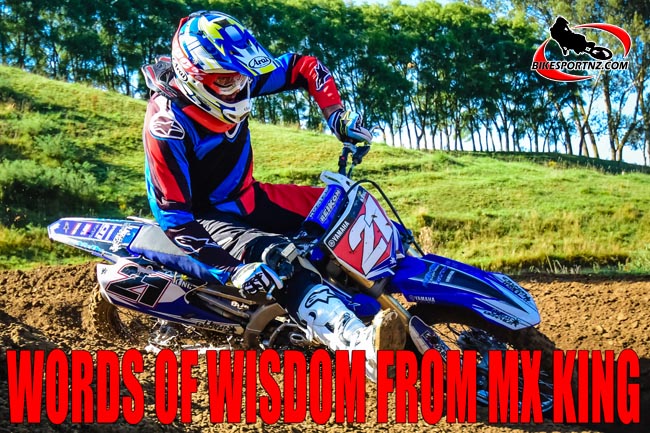
When former motocross champion Darryll King speaks, it probably pays to listen.
The multi-time former Australian and New Zealand motocross champion from Hamilton is now aged in his late 40s, but there was a time when he ruled the roost, before retiring from the World Championship Grand Prix phase of his career in 2000.
King enjoyed a sparkling 10-year run in the 500cc world championships in Europe throughout the 90s – he finished 49th in 1991, 34th in ’92, 6th in ’93, 11th in ’94, was 3rd in ’95, 5th in ’96 (when his younger brother Shayne won the title), was twice runner-up, in ’97 and ’98, and finished a disappointing 15th after crashing in 1999.
 Then, although he had by then been retired from top international racing for a couple of years and in his early 40s, King stunned again when he was able to add yet two more national titles to his CV, winning the New Zealand MX2 (250cc) title for Yamaha in 2011 and again in 2012.
King has seen a lot happen in his beloved sport over the years and he has always been keen to put something back, often busy running training schools for young riders, and he was keen to sit down with BikesportNZ.com and chat about where the sport has been and where it is heading.
It’s a rare thing these days that a rider transitions smoothly from winning at junior level to winning at senior level. Darryll King and his brothers Shayne and Damien managed to do it and other riders in the past such as Darryl Atkins, Leon Andrew and John Penny were also immediately successful on their arrival in the senior ranks.
However, apart from a few notable exceptions in later years, with individuals such as Josh Coppins and Ben Townley, it typically takes a rider a few years after leaving the juniors to settle into the faster senior environment and find their feet again.
It’s not a lack of skill, strength, stamina or equipment that holds young riders back these days – Darryll King believes that young riders today are not doing enough thinking.
“They simply need to harness the power of the brain.
“I think the most important thing, early on in the senior ranks, is for them to have confidence in themselves to get good starts. The results will come quickly from that,” King explained.
“We saw it happen with a young Hamish Dobbyn when he holeshot one of the senior races a few years ago on a YZ450F at the Whakatane Summercross and he led for a couple of laps. From that day on, in his mind, he knew he could run with these guys. We’ve seen the same thing happen with riders like Kayne Lamont and Josiah Natzke. 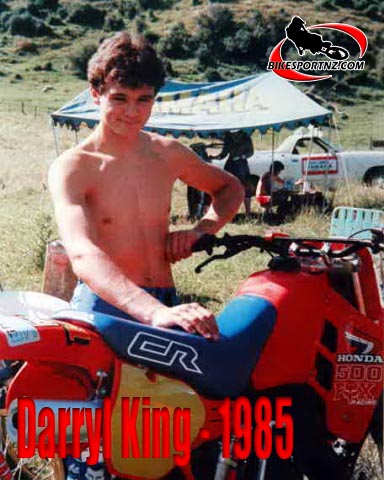
“When they are on the start line, these young guys have just got to visualise in their minds getting the holeshot. They’re usually lighter on the bike that the older guys too, so that’s an advantage straight away. It means they can get a better jump out of the gate.
“Once they can get a start and then run with the likes of Cody Cooper and Brad Groombridge and Scott Columb, even if just for half a lap, it is a mental boost. If they can do that a few times, the confidence grows.
“If they’re starting in 20th place, well that’s simply not good enough.”
Are the young riders perhaps being intimidated by the older, more-experienced no-compromise style of riders racing in the senior ranks?
“Usually they are of smaller build because they’re only 16 or 17 years of age, racing against guys in their 20s, but I think it’s all in their head, to be honest.
“If they programme themselves in their head that these other riders are just human too, they can beat them. Perhaps they just don’t believe it.
“They’ve got the skills. They do all the training. They have the fitness. They’ve been coached by some of the best senior riders in the country, from the likes of Peter Broxholme or Rhys Carter or Michael Phillips, and they go riding with these guys during the week. You can turn up to the Rotorua motocross track and ride alongside top national competitors almost any day of the week and judge your speed against them. But the weekend comes and there’s a mental block.
“If that’s the answer right there, then these young riders need to talk to a sports psychologist or read some books about how to get your mind to the level you need to get it at.”
“Riders are not spending enough time on mental preparation. They might think that, if they buy a new exhaust pipe for the bike, it’ll solve their problems. A new rear tyre might be important but it’s important also to spend time visualising and setting goals. Put a picture of the upcoming race-track on your wall the week before the event and mark on it the lines you should use.
“It’s old-school but so important to walk the track several times during race day. I used to admire Daryl Hurley over the years. He’s one guy that used to go out and look for lines and study how the track was changing during the day. He got better as the day went on. He was a major competitor of mine and we had some great battles. Get out there with your mum or day, brother, friend or mechanic, and walk the track.
“If you can make little improvements each time, you’re heading in the right direction to becoming a champion.”
Check back with BikesportNZ.com tomorrow when we bring you PART TWO of this interview.
© Words and photos by Andy McGechan, www.BikesportNZ.com
Find BikesportNZ.com on FACEBOOK here